

SEC-08 · Security & access
Long-range, thermal and wide-area surveillance cameras
For borders, coasts, pipelines, farms and large industrial perimeters, where the target is hundreds of metres or kilometres away and ordinary cameras see nothing useful.
The technologies, and what each one is for
- Long-range PTZ cameras with high optical zoom and laser infrared, to recognise and follow a target at distance, day and night.
- Thermal cameras, fixed or PTZ, that detect people and vehicles by heat in total darkness, dust and light fog, often paired with a visible camera in one dual-sensor unit.
- Rotating panoramic thermal sensors that scan 360° continuously and raise an alert for anything that moves across a very wide area.
- LiDAR and radar, which locate a moving object precisely and steer a PTZ camera onto it automatically.
Most wide-area sites combine two layers: a sensor that detects everywhere, and a camera that looks closely at what was detected.
Range is a calculation, not a brochure figure
How far a camera "sees" depends on the job. Detecting that something is there needs few pixels on the target; recognising a person or a vehicle needs more; identifying needs many more. We calculate detection, recognition and identification distances for the lens and sensor against the real target size, and state them for your site in clear air and in typical dust and heat haze.
Mast, power and the Saudi environment
At long focal lengths, a mast that sways a few millimetres ruins the image, so the mast and foundation are engineered with the camera. We allow for heat haze over hot ground, dust, sun load on housings, lightning protection and the power source, which at remote points is often a solar system sized for the full load. See our mobile units and solar-powered poles.
Our part, start to finish
What we do on this kind of project
We select the equipment to fit your site, not to clear a stock list. We design the system, install and commission it, and keep it working.
Design & consulting
- Site survey and line-of-sight study
- Detection, recognition and identification ranges per position
- Sensor and camera layering plan
- Mast, power and communications design
Installation
- Masts, housings and cameras
- Wireless or fibre links to the control room
- Integration with radar, LiDAR and video management
- On-site range verification, day and night
Maintenance
- Lens and housing cleaning plan
- Alignment and calibration checks
- Firmware and analytics updates
- Fault response
Before you buy
Questions to settle first
These decide cost and performance more than the brand on the box. We work through them with you at survey stage.
- What must be detected: a person, a vehicle, a boat, and at what distance?
- Do you need only detection, or recognition and identification too?
- What are the visibility conditions: dust, fog, heat haze, complete darkness?
- Is there power and a network link at the mast positions?
- Who responds to an alert, and how fast?
- How high and how rigid can the mast be?
Frequently asked questions
Thermal camera or long-range camera with laser infrared?
They do different jobs. Thermal detects reliably in darkness and haze but cannot identify a face or read a plate. A long-range visible camera with laser infrared recognises and identifies. Many sites use both in one unit.
How far can a thermal camera detect a person?
From tens of metres to more than a kilometre, depending on the lens and sensor. We give you the calculated detection, recognition and identification distances for the specific model and your conditions rather than a headline figure.
Can these cameras work at sites with no power?
Yes. Remote positions are commonly powered by solar with battery storage sized for the load and for several days without sun, and linked by wireless or cellular.
Works alongside
Related systems
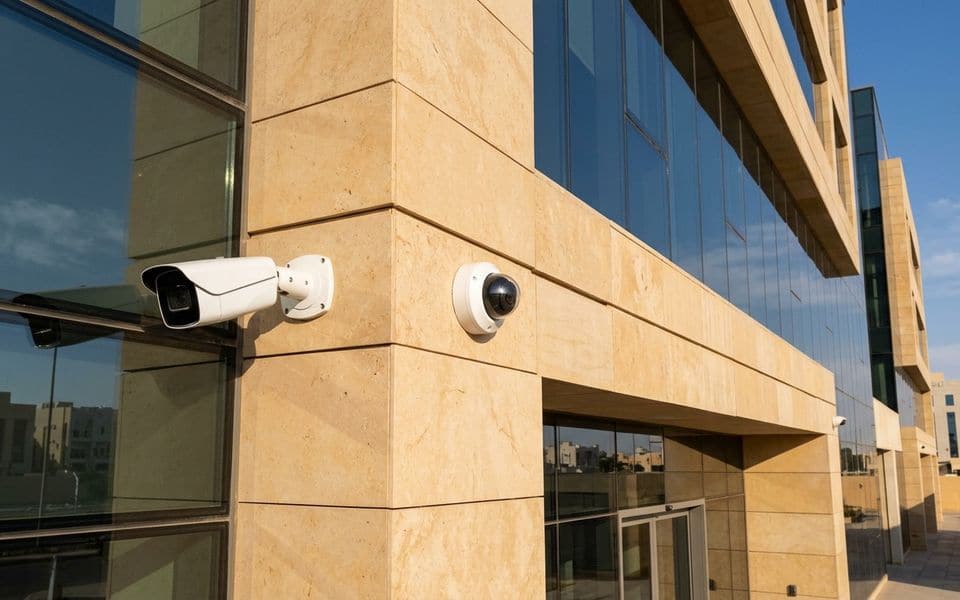
Video surveillance (CCTV)
From standard IP systems to specialised, high-performance video.
Read more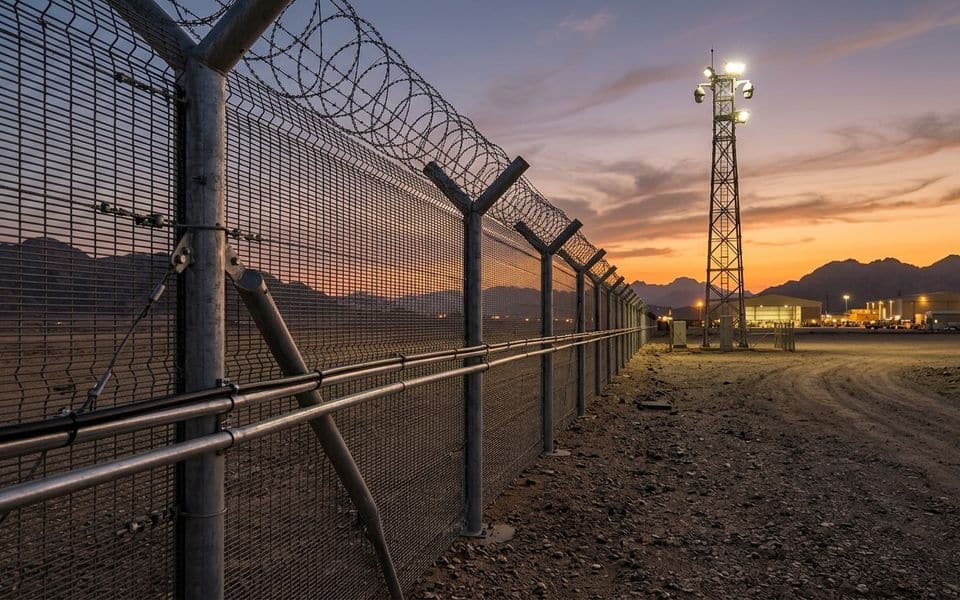
Intrusion & perimeter detection
Alarm systems and fibre-optic fence detection.
Read moreSEC-06Mobile solar surveillance
Solar-powered camera poles and relocatable units for sites with no mains or cabling.
Read more